
Diabetic Retinopathy
Diabetic retinopathy is the leading cause of blindness in working-age adults. It develops slowly and often without obvious symptoms in the early stages, which is why many people do not realize the damage is happening until their vision is already affected. If you have diabetes and are concerned about your eye health — or have already been diagnosed with diabetic retinopathy — ophthalmic acupuncture offers a way to actively support your vision alongside your existing care.
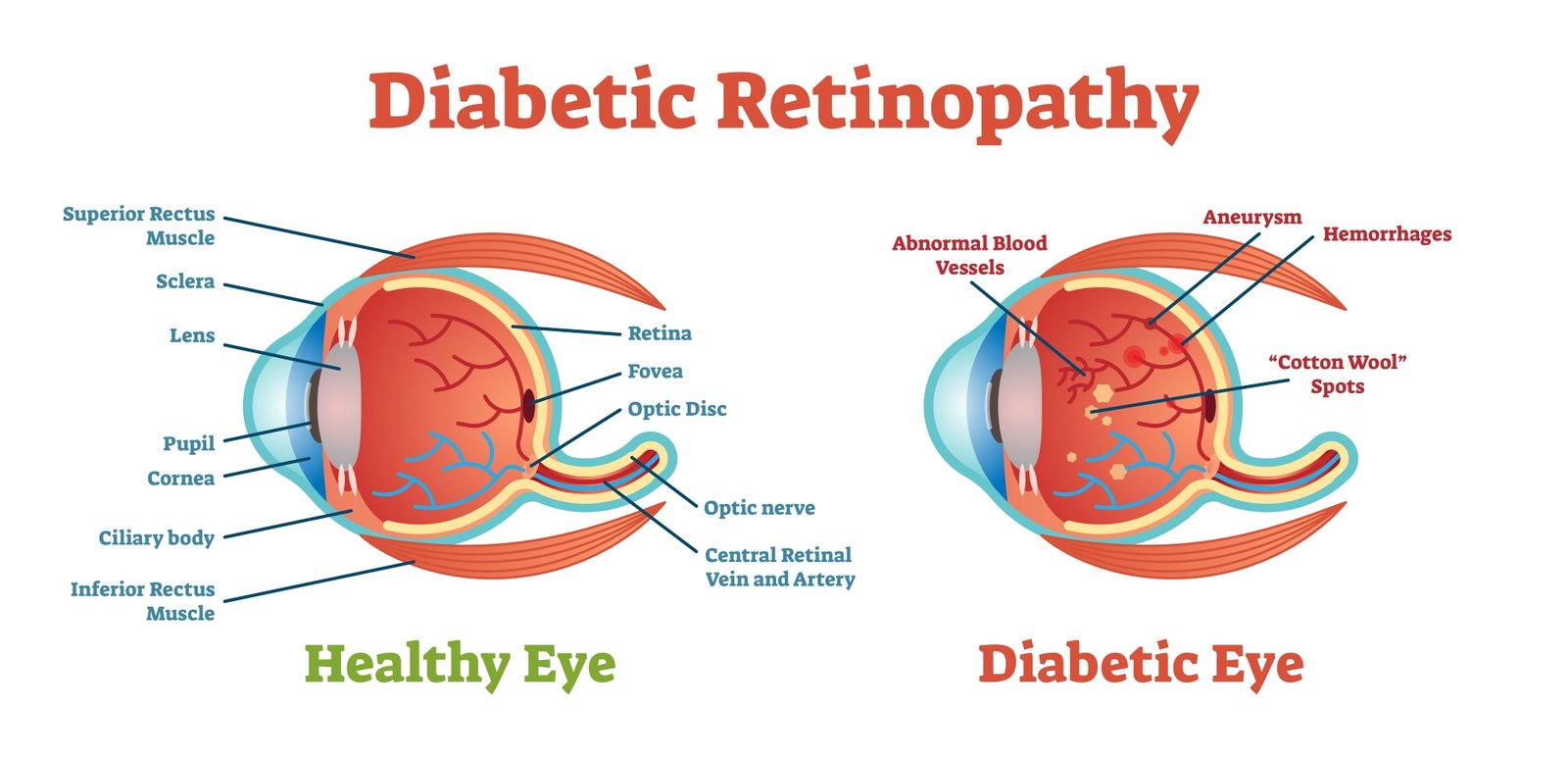
What Is Diabetic Retinopathy?
Diabetic retinopathy happens when high blood sugar damages the tiny blood vessels in the retina — the light-sensitive tissue at the back of your eye. Over time, these damaged vessels can leak fluid, swell, or close off entirely. In more advanced stages, new abnormal blood vessels grow on the surface of the retina, which can bleed and cause serious vision loss.
There are two main stages:
Non-Proliferative Diabetic Retinopathy (NPDR)
- The earlier and more common stage
- Small blood vessels in the retina weaken and begin to leak
- May cause mild blurring or no symptoms at all
- Can progress if blood sugar remains poorly managed
Proliferative Diabetic Retinopathy (PDR)
- The more advanced stage
- New, fragile blood vessels grow on the retina’s surface
- These vessels bleed easily, leading to sudden and severe vision loss
- Can cause retinal detachment if left untreated
Risk factors include how long you have had diabetes, how well your blood sugar is controlled, high blood pressure, high cholesterol, and smoking. The longer you have diabetes, the higher your risk — but good management of your overall health can make a real difference in slowing the progression.
Why Diabetic Retinopathy Is More Than Just a Blood Sugar Problem
Most people understand that managing blood sugar is essential for preventing diabetic retinopathy. And it is. But blood sugar control alone does not always stop the disease from progressing.
The damage to retinal blood vessels is driven by more than just glucose levels. Chronic inflammation weakens the walls of the blood vessels and makes them more prone to leaking. Oxidative stress — the buildup of harmful waste products that the body cannot clear fast enough — accelerates the breakdown of the delicate vascular tissue in the eye. Poor circulation means less oxygen and fewer nutrients reach the retina, which is one of the most metabolically demanding tissues in the body.
These factors work together. Even patients with well-controlled blood sugar can still see their retinopathy progress if inflammation, oxidative stress, and circulation are not also addressed. This is where the standard approach of monitoring and managing glucose levels alone can leave a gap.
How Acupuncture Treats Diabetic Retinopathy
The goal of treatment is to support retinal health by improving blood circulation to the eye, reducing inflammation, and lowering the oxidative stress that damages retinal blood vessels.
No needles are placed in or on the eyes at any point during treatment.
The acupuncture points used are located along the eyebrows, temples, and around the orbital bone — with no contact to the eye itself. Additional points on the arms and legs target circulation, blood sugar regulation, and nervous system function. Because diabetes is a systemic condition, treatment is designed to address the whole body — not just the eyes.
In Traditional Chinese Medicine, the health of the eyes is closely connected to the health of the liver, kidneys, and spleen. Ophthalmic acupuncture works to support these organ systems, which in turn supports the blood vessels, circulation, and energy supply that the retina depends on.
In our clinic, diabetic retinopathy patients report improvements in visual clarity, reduced blurring, and greater stability in their vision over time. Every patient’s progress is tracked and documented so we can measure real changes alongside your regular eye exams.
This approach works alongside your diabetes management, eye injections, laser treatments, or any other care you are currently receiving — not in place of it.
Results and What the Research Shows
A 2025 systematic review and network meta-analysis published in Medicine analyzed 28 clinical trials involving 2,801 diabetic retinopathy patients. The study found that acupuncture and related therapies had significant effectiveness in treating diabetic retinopathy — improving vision, reducing macular swelling, and producing relatively few side effects. The study concluded that integrative treatment combining acupuncture with conventional care was more effective than either approach on its own.
An earlier systematic review of randomized controlled trials found that acupuncture combined with standard medication was more effective than medication alone in improving visual acuity in diabetic retinopathy patients.
A 2025 review published in the Journal of Diabetes Research confirmed that acupuncture delays the progression of microvascular complications like diabetic retinopathy through its effects on circulation, inflammation, and oxidative stress — the same mechanisms we target in our treatment approach.
If you are living with diabetic retinopathy and want to explore what ophthalmic acupuncture can offer, visit our Honor Vision Program page to learn how we can help.