
Retinitis Pigmentosa
Retinitis pigmentosa (RP) is a rare genetic condition that slowly destroys the light-detecting cells in your retina. It usually starts with difficulty seeing at night and gradually narrows your field of vision over time. If you or someone you care about has been diagnosed, you already know how few treatment options exist. Acupuncture offers a different path — one focused on protecting what remains and slowing what is being lost.
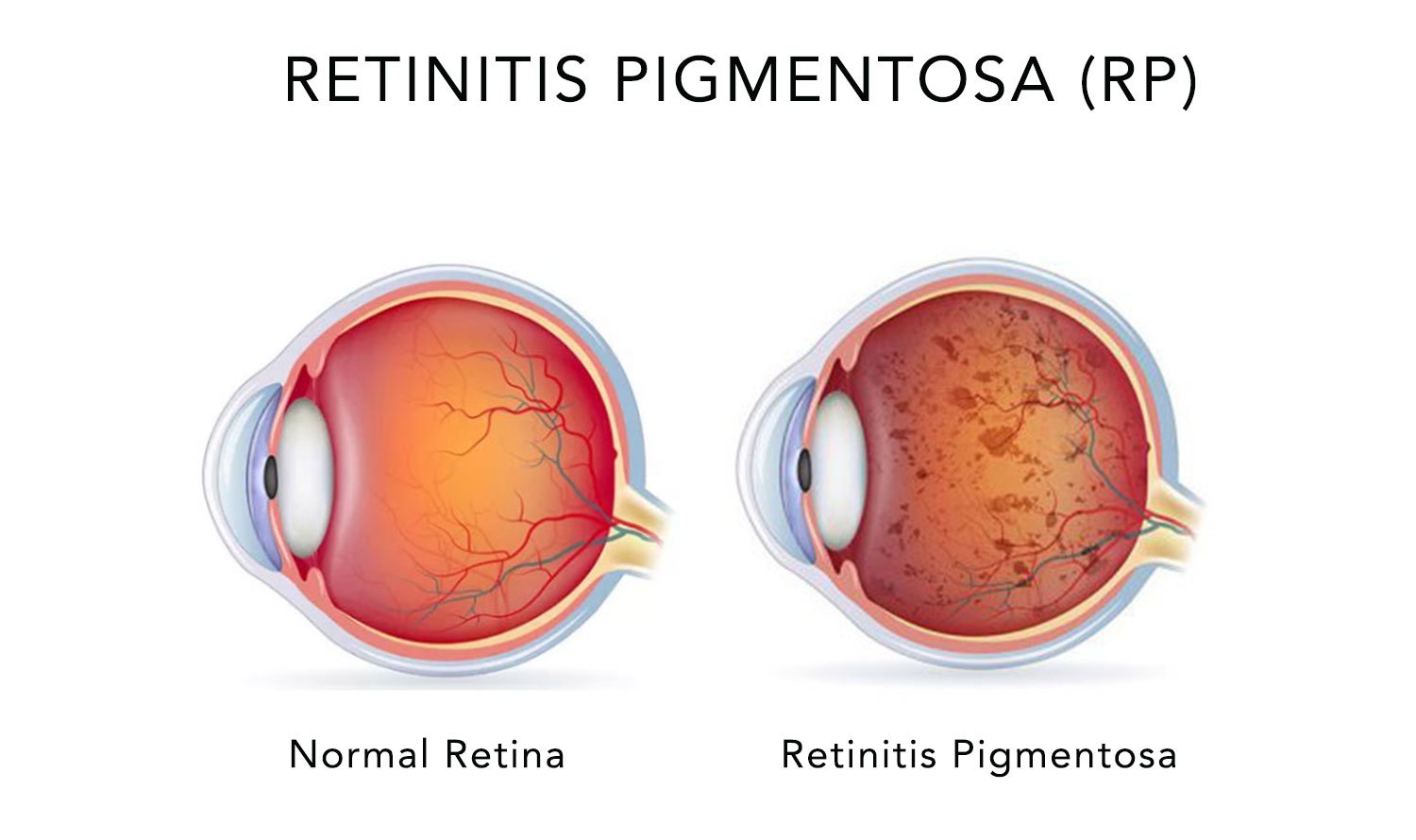
What Is Retinitis Pigmentosa?
Retinitis pigmentosa is a group of inherited eye diseases where the cells in the retina that detect light — called rods and cones — gradually break down. The rod cells, which help you see in low light and out to the sides, are usually the first to be affected. This is why trouble seeing at night is often the earliest sign.
Over time, your field of vision narrows from the outside in. This is often described as tunnel vision. Your central vision may stay clear for years, but the shrinking field makes everyday things like walking through a room, driving, or moving through crowds harder and harder.
RP progresses at different rates for different people. Currently, the only approved gene therapy targets just one specific mutation, leaving the vast majority of RP patients without a direct genetic treatment. Beyond that, conventional medicine offers very little — mainly vitamin A supplements and regular monitoring.
This is why so many RP patients look for alternative and complementary approaches.
Why Retinitis Pigmentosa Is More Than Just a Genetic Condition
RP starts with a genetic cause, but the speed at which vision is lost depends on more than genetics alone.
When blood flow to the retina drops, the light-detecting cells get less oxygen and fewer nutrients. Ongoing inflammation in the retina puts added stress on cells that are already fragile. Oxidative stress — damage that happens when the body cannot clean up harmful waste products fast enough — makes things worse. As cells weaken and die, the buildup of waste in the retina speeds up, creating a cycle that feeds on itself.
These are whole-body issues, not just eye problems. But the retina is one of the most active tissues in your body, so it is often one of the first places to show the effects.
This matters because it means there are factors beyond your genetics that can be addressed. If the things speeding up the damage can be managed, there is a real opportunity to slow the process and support the cells that are still working.
How Acupuncture Treats Retinitis Pigmentosa
The goal of treatment is to protect the remaining light-detecting cells by improving blood flow to the retina, reducing inflammation and oxidative stress, and supporting the nerve pathways connected to vision.
No needles are placed in or on the eyes at any point during treatment.
The acupuncture points used are located along the eyebrows, temples, and around the bone surrounding the eye — with no contact to the eye itself. Additional points on the arms and legs work through the nervous system to boost circulation to the retina and support the health of the remaining cells.
In our clinic, RP patients report improvements in night vision, wider peripheral awareness, sharper contrast, and greater visual stability. Every patient’s progress is tracked using visual field tests and acuity measurements so we can document real changes — not just how you feel, but what the numbers show.
This approach works alongside any existing care you are receiving and is not a replacement for regular check-ups with your eye doctor.
Results and What the Research Shows
A pilot study at Johns Hopkins University found that half of the RP patients treated with acupuncture had meaningful improvements in visual function. Three of the nine patients tested showed a 13 to 53-fold improvement in light sensitivity, and those gains held for 10 to 12 months after treatment. The acupuncture protocol used in this NIH-funded study was developed with Dr. Andy Rosenfarb, a leading specialist in ophthalmic Chinese medicine — and one of Andrew Lin’s direct mentors in Chinese Medicine Ophthalmology.
A separate clinical trial comparing acupuncture to a sham control group found that acupuncture produced a 34% greater increase in blood flow to the macular area compared to the control group. The study also showed improved blood flow in the central retinal artery — a physical change measured by imaging, not self-reporting.
A 2025 review published in International Ophthalmology confirmed that acupuncture helps RP by slowing photoreceptor cell death, improving retinal blood flow, and supporting the areas of the brain connected to vision.
Results vary from person to person. This is not a cure — but for many RP patients who have been told there is nothing more that can be done, these findings represent real, measurable hope.
If you are living with retinitis pigmentosa and want to explore what acupuncture can offer, visit our Honor Vision Program page to learn how we can help.